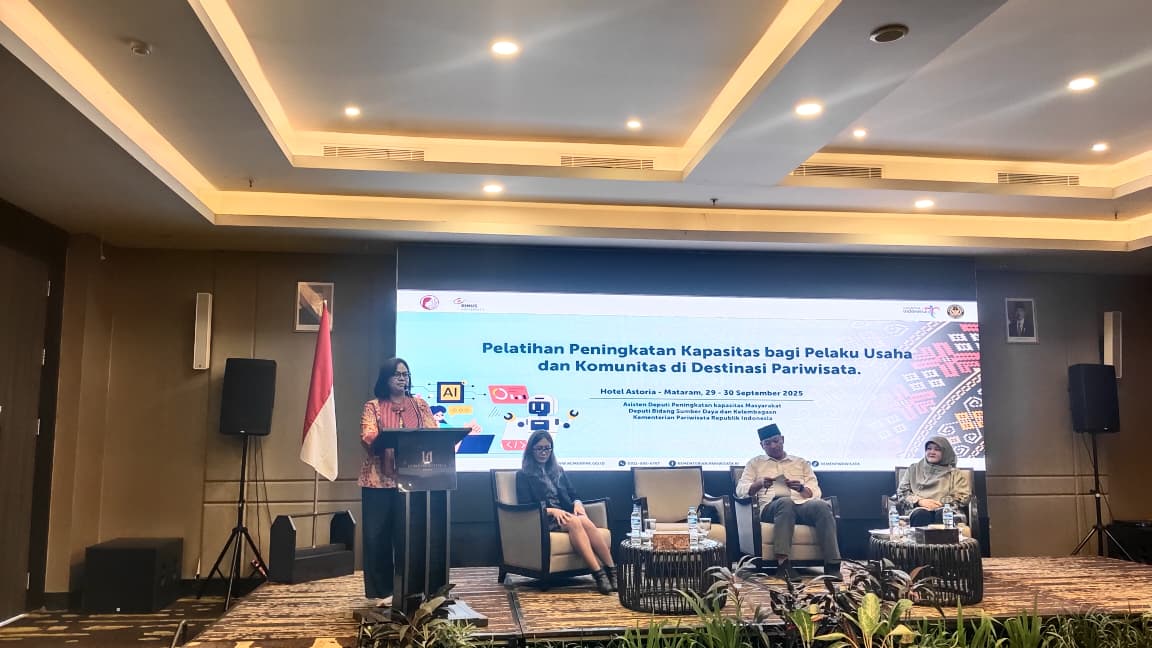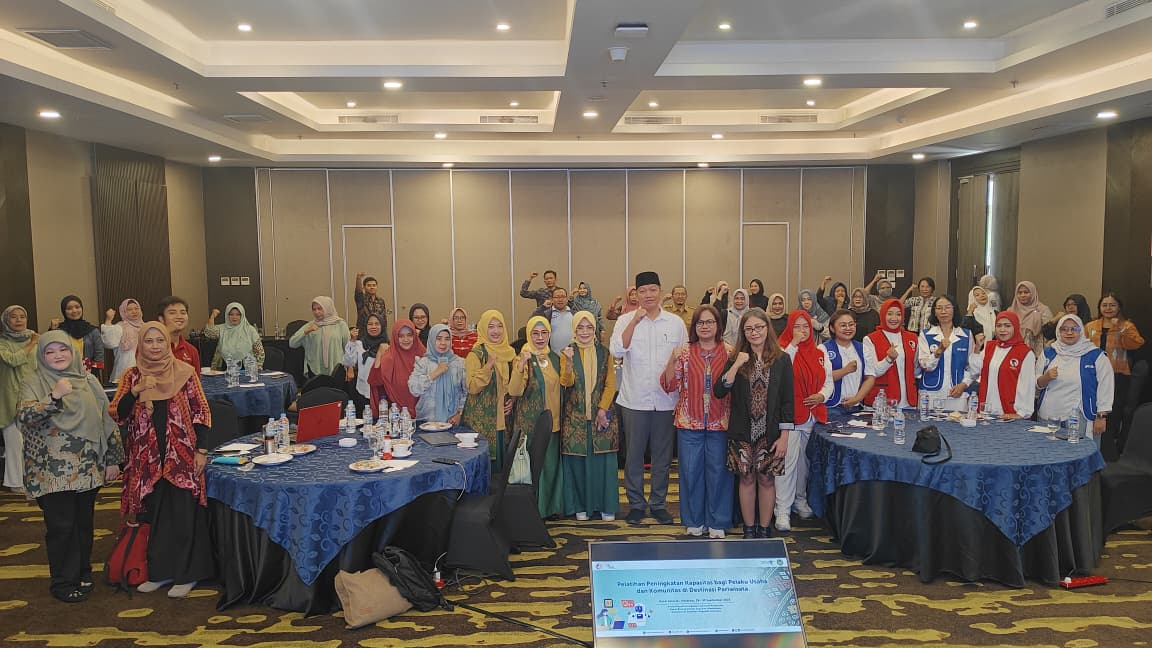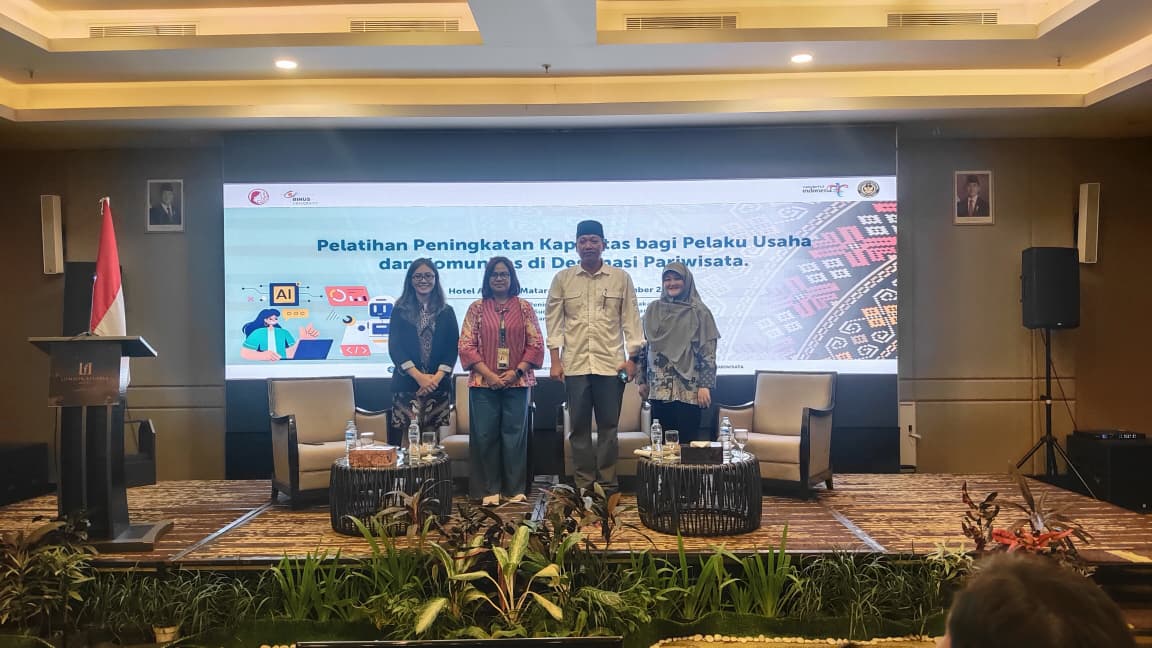


Mataram, 30 September 2025 – The Ministry of Tourism and Creative Economy of the Republic of Indonesia, through the Assistant Deputy for Community Capacity Building under the Deputy for Resources and Institutions, in collaboration with the West Nusa Tenggara (NTB) Provincial Tourism Office, organized a Softskill Training on Capacity Building for Tourism Entrepreneurs and Communities. The program was held from 29 to 30 September 2025 at Hotel Astoria, Mataram.
The training was aimed at strengthening the role of tourism entrepreneurs and community members in supporting the development of sustainable and inclusive tourism destinations. Particular emphasis was placed on women’s empowerment, digital technology utilization, and the improvement of communication skills.
According to the Ministry, the objectives of the program are threefold:
- To enhance the capacity of tourism actors and communities to adapt to changing industry dynamics.
- To empower women with relevant softskills aligned with the demands of the digital era.
- To support the implementation of the National Action Plan (RAN) for the Prevention of Human Trafficking (TPPO), Gender Mainstreaming, and Disability Inclusion.
The event was officially opened by the NTB Provincial Tourism Office and attended by various stakeholders from the tourism sector. The strong participation reflects a shared commitment to strengthening local tourism ecosystems in line with national priorities.
The training also featured academic contributions, including a session delivered by Dr. Nunung Nurul Qomariyah, S.Kom, M.T.I., a Computer Science lecturer from Binus International. Her presentation underscored the importance of digital literacy and innovation in equipping tourism communities with the skills required to remain competitive and sustainable.
Through this initiative, the Ministry and NTB Tourism Office reaffirmed their commitment to advancing human resource development in the tourism sector, ensuring that communities are not only beneficiaries but also active contributors to Indonesia’s tourism growth.