
Guest Lecture Session: Software-Defined Networking from a Software Engineering Perspective
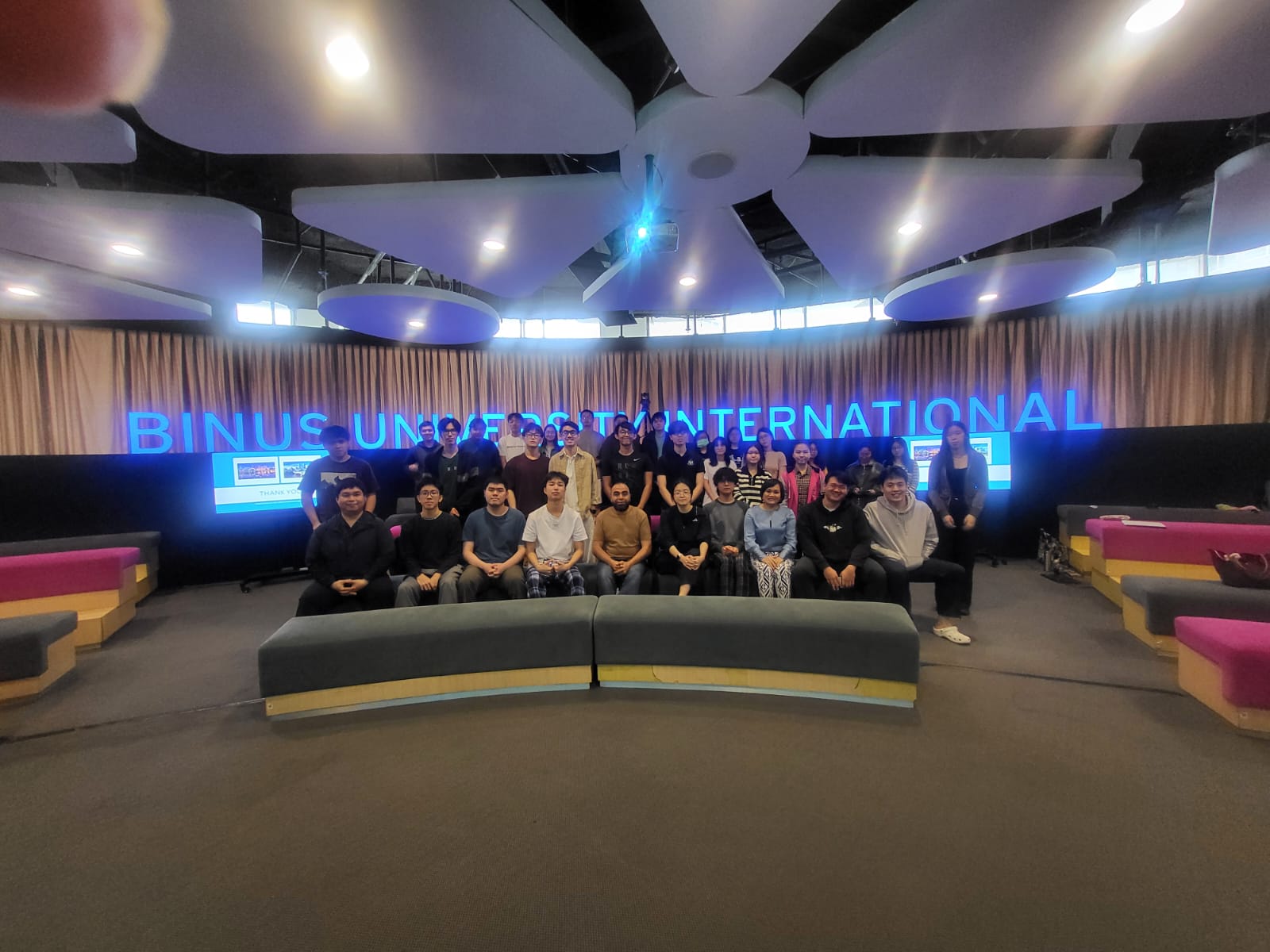
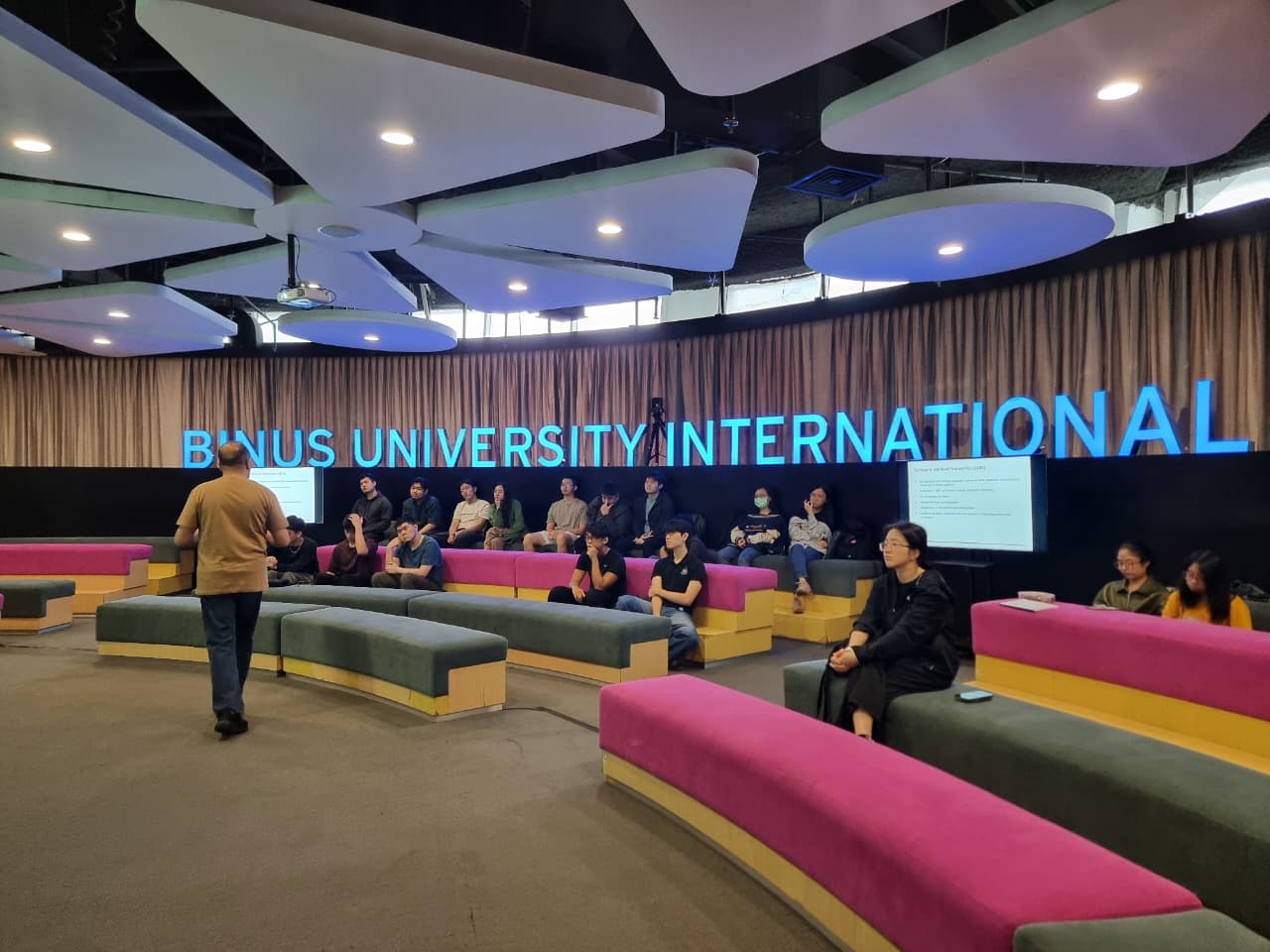
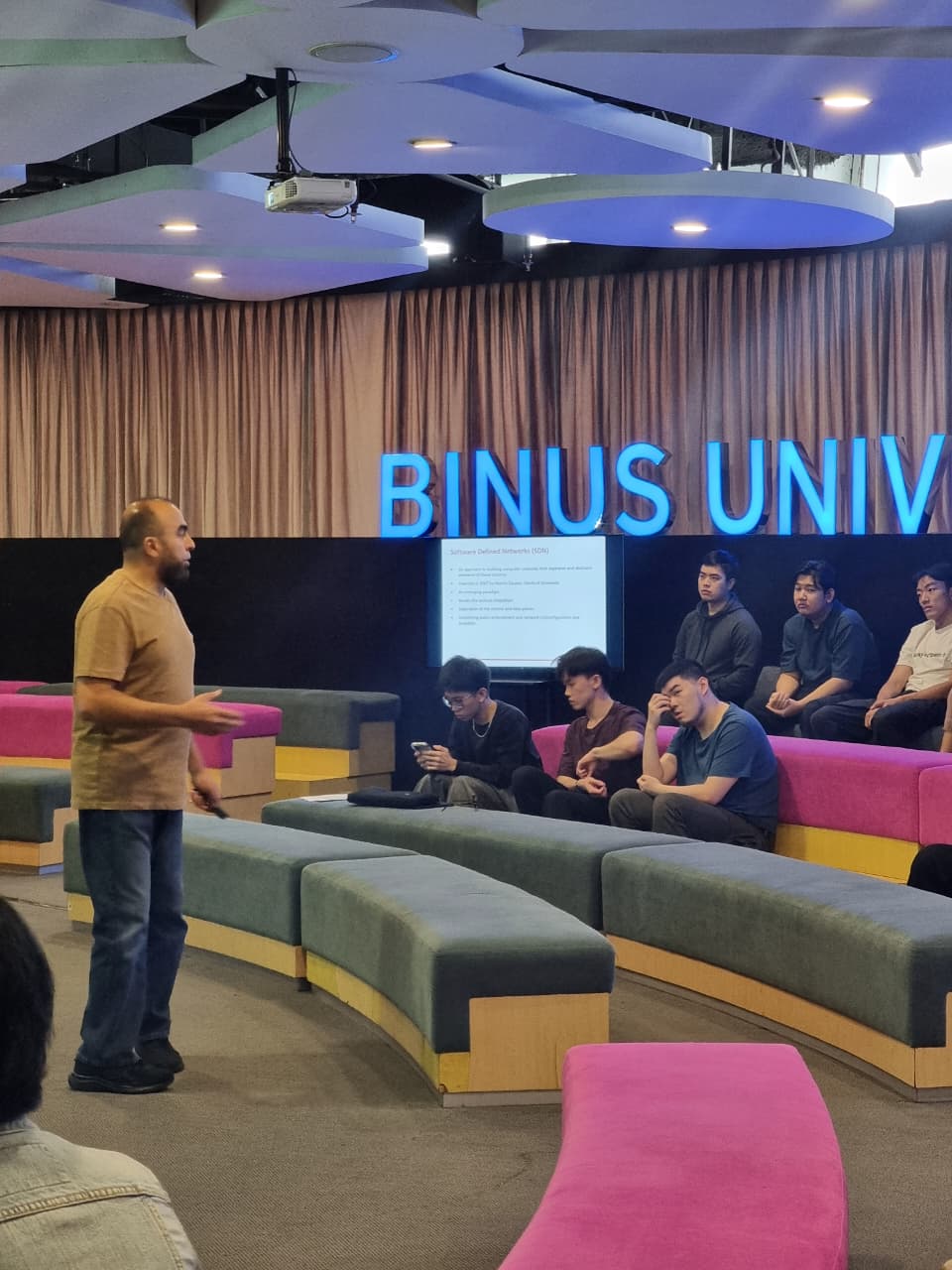
Jakarta, February 9, 2026 — The BINUS International FX Campus hosted a distinguished academic event on Monday, welcoming students, faculty members, and technology enthusiasts to a special guest lecture titled “Software-Defined Networking from a Software Engineering Perspective.” The session featured Dr. Rabei Alhadad from La Trobe University, whose expertise in network systems and software engineering research provided valuable international insight.
In his lecture, Dr. Rabei delivered a comprehensive examination of Software-Defined Networking (SDN), positioning it not merely as a networking innovation but as a software-centric paradigm shift. He began by outlining the limitations of traditional networking architectures, where tightly coupled control and data planes often result in inflexibility, complex configuration management, and scalability constraints.
Dr. Rabei explained how SDN introduces architectural decoupling, enabling centralized controllers to program network behavior dynamically. From a software engineering (SE) standpoint, he emphasized that SDN systems must be designed using rigorous engineering principles such as modularization, abstraction layers, interface definition, and maintainability metrics.
“Networking infrastructure today must be engineered with the same discipline as large-scale software systems,” he noted during the session, underscoring the importance of applying structured development lifecycles, automated testing pipelines, and version-controlled deployments to network applications.
The lecture provided a technical deep dive into several key components of SDN:
-
Controller-based architecture and control plane programmability
-
Northbound and southbound APIs, particularly their role in enabling orchestration and interoperability
-
Network virtualization and abstraction mechanisms
-
Scalability and fault tolerance in distributed SDN controllers
-
Security considerations, including attack surfaces introduced by centralized control
Dr. Rabei also discussed how software engineering methodologies such as DevOps practices, continuous integration/continuous deployment (CI/CD), automated regression testing, and formal verification can be integrated into SDN development workflows to ensure system robustness and reliability.
Real-world case examples were presented to illustrate SDN deployment in cloud data centers, enterprise networks, and research testbeds. These examples highlighted performance optimization strategies, latency reduction techniques, and adaptive traffic management using programmable logic.
The session concluded with a lively Q&A segment, during which students posed questions about research opportunities, industry adoption barriers, and emerging trends such as intent-based networking and AI-driven network management. Discussions also touched on the evolving role of software engineers in infrastructure-level innovation and the growing demand for cross-disciplinary expertise combining networking fundamentals with advanced programming skills.
Participants expressed enthusiasm about gaining exposure to international research perspectives. For many students, the lecture provided clarity on how theoretical concepts studied in class translate into real-world engineering challenges and innovation pathways.
The event reflects BINUS International’s commitment to fostering global academic engagement and exposing students to cutting-edge developments in information technology. Hosting scholars from internationally recognized institutions such as La Trobe University reinforces collaborative ties and promotes knowledge exchange across borders.
By integrating global expertise into its academic environment, BINUS International continues to enhance its curriculum relevance and prepare students for the rapidly evolving landscape of digital infrastructure and intelligent network systems. The guest lecture not only broadened technical understanding but also inspired students to explore advanced research and career pathways in software-defined networking and software engineering innovation.