Guest Lecture Session: Language Models as Systems – From Words to Decisions
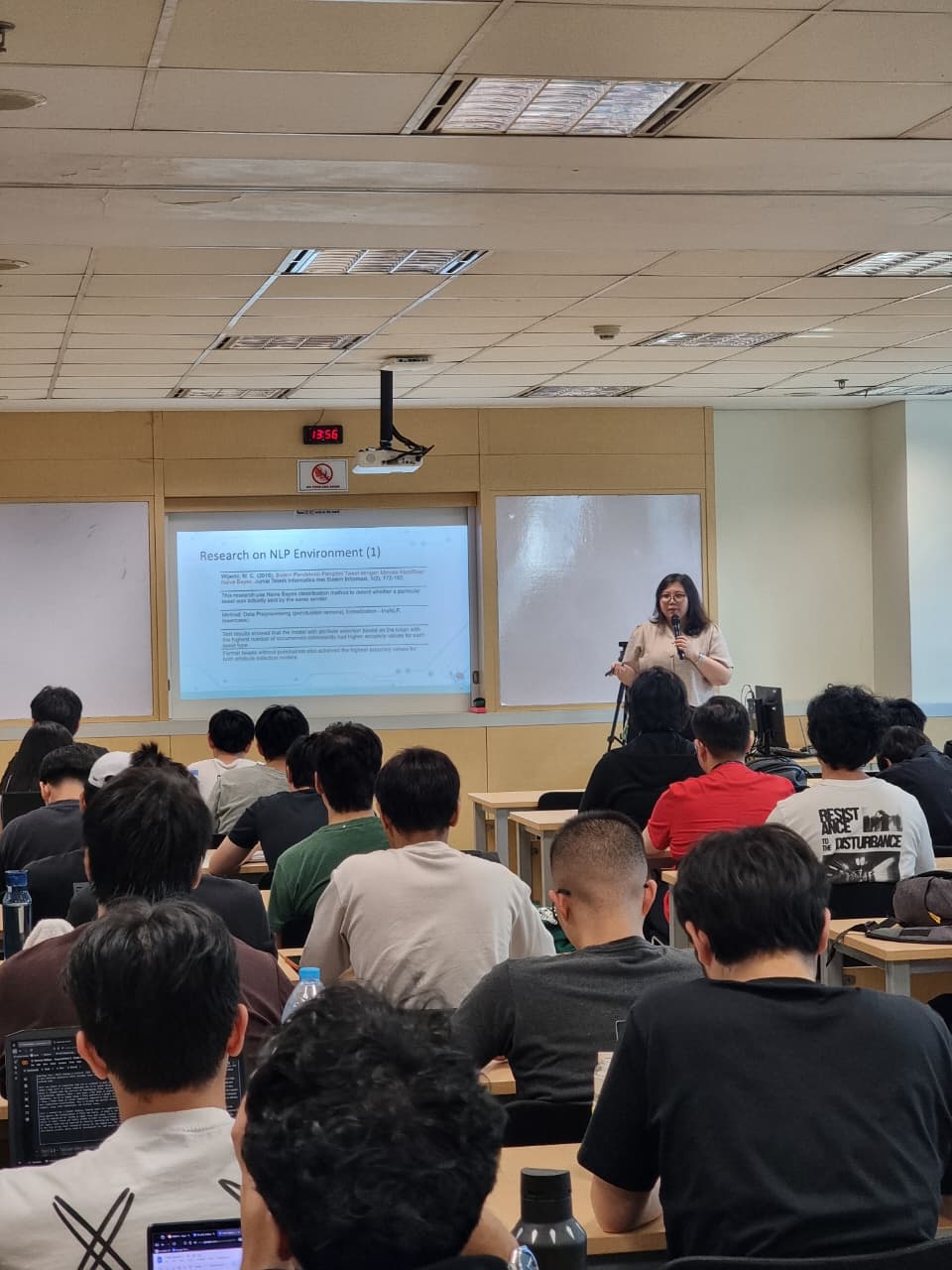
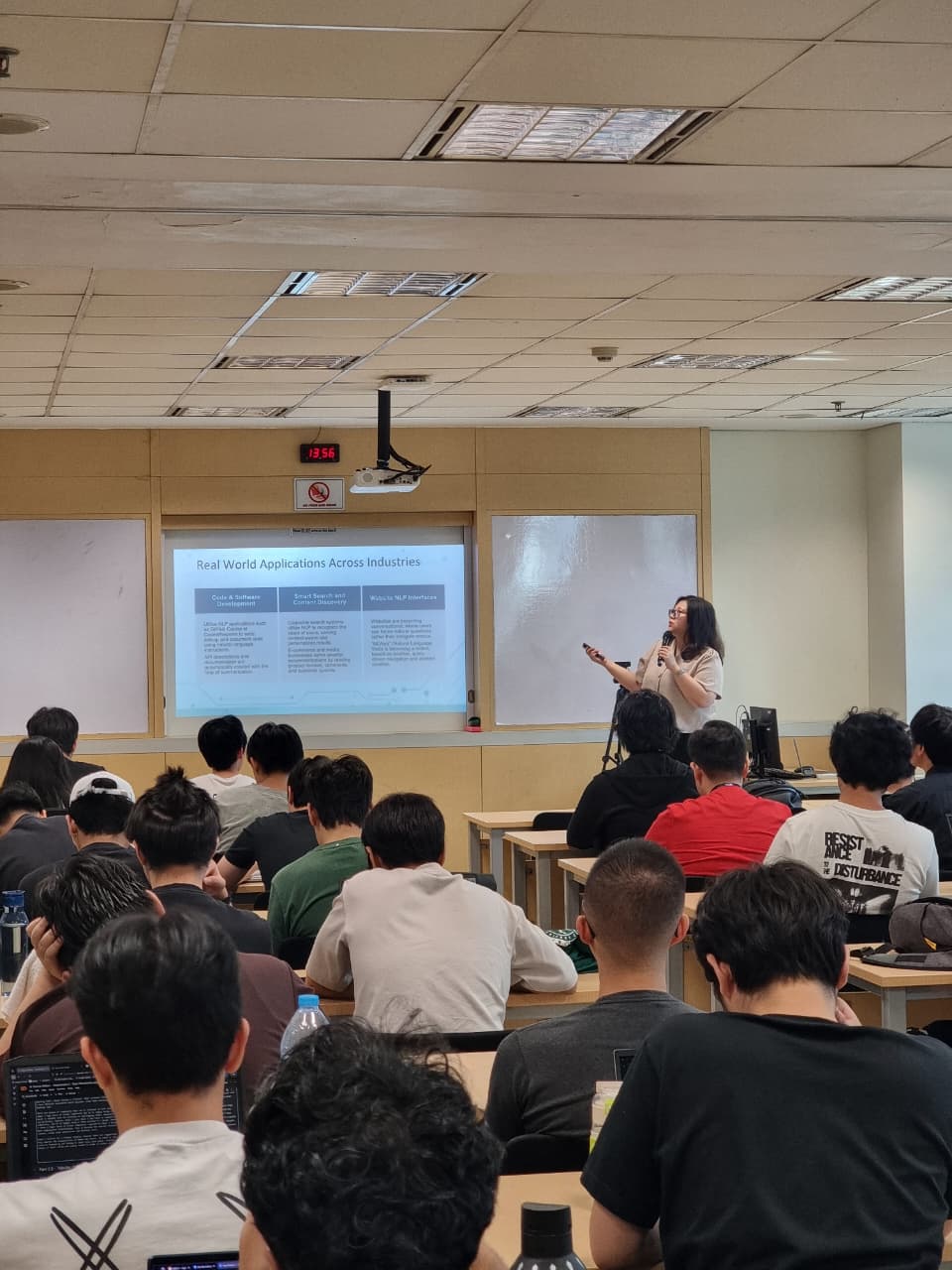
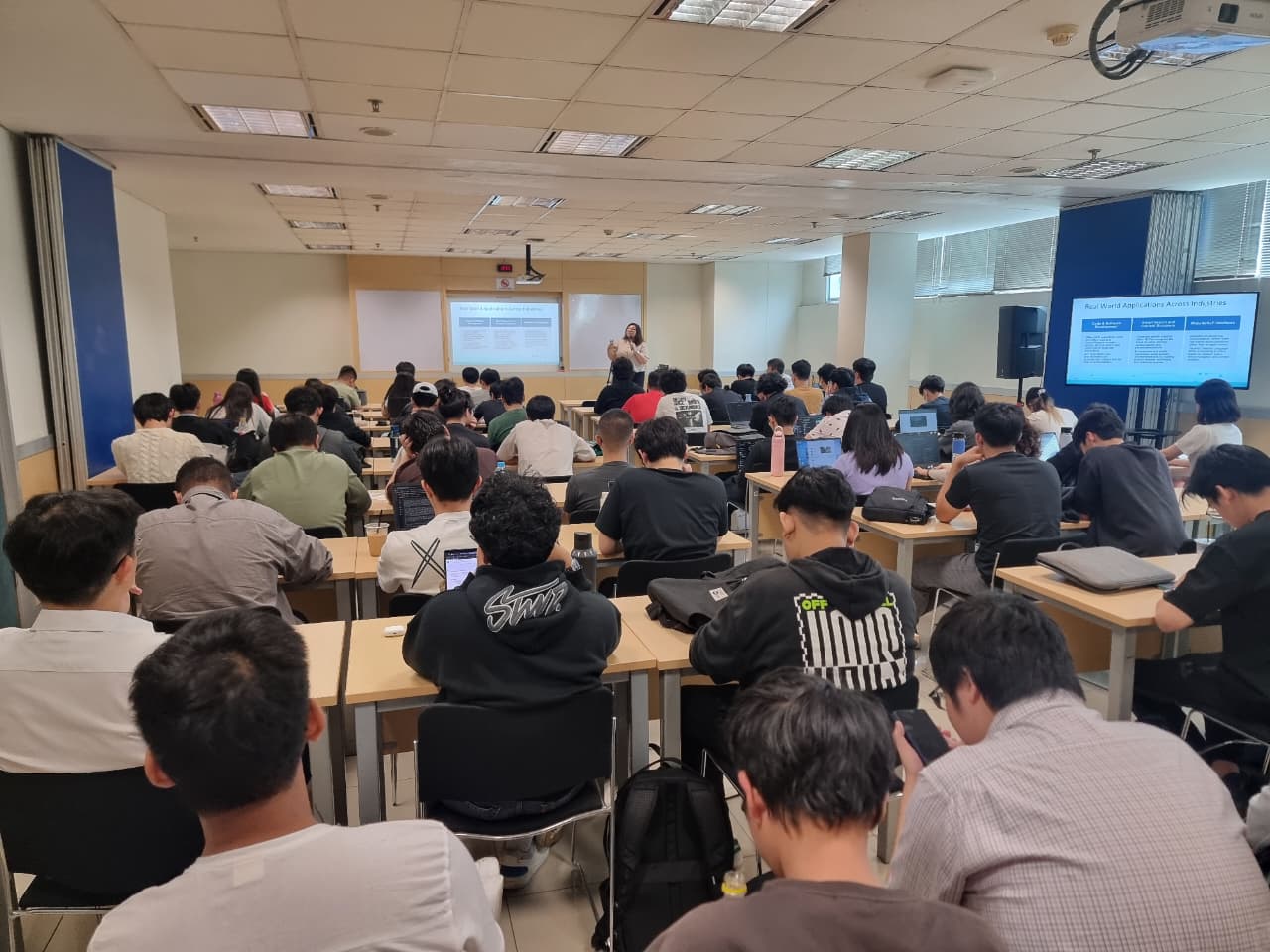
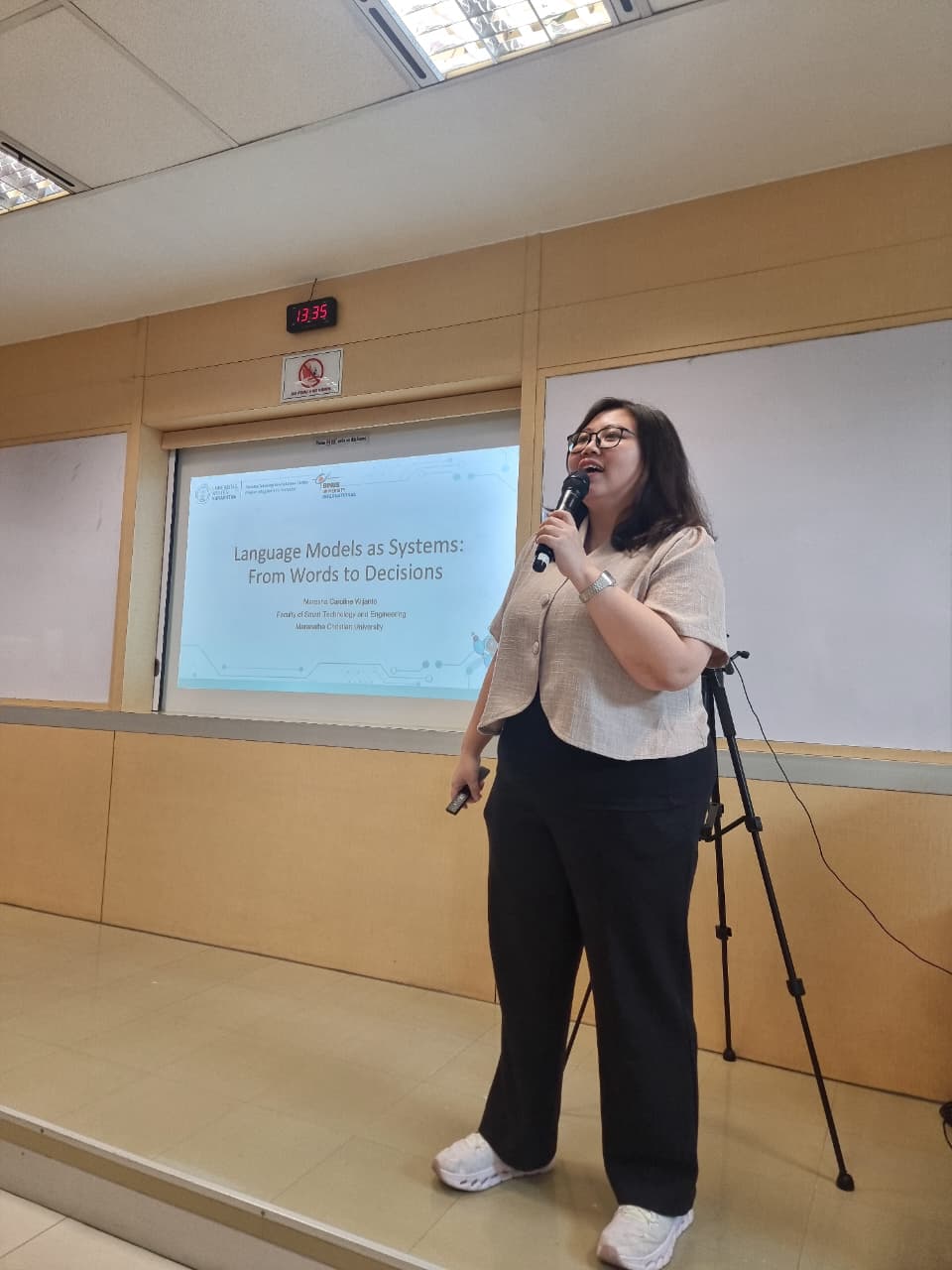
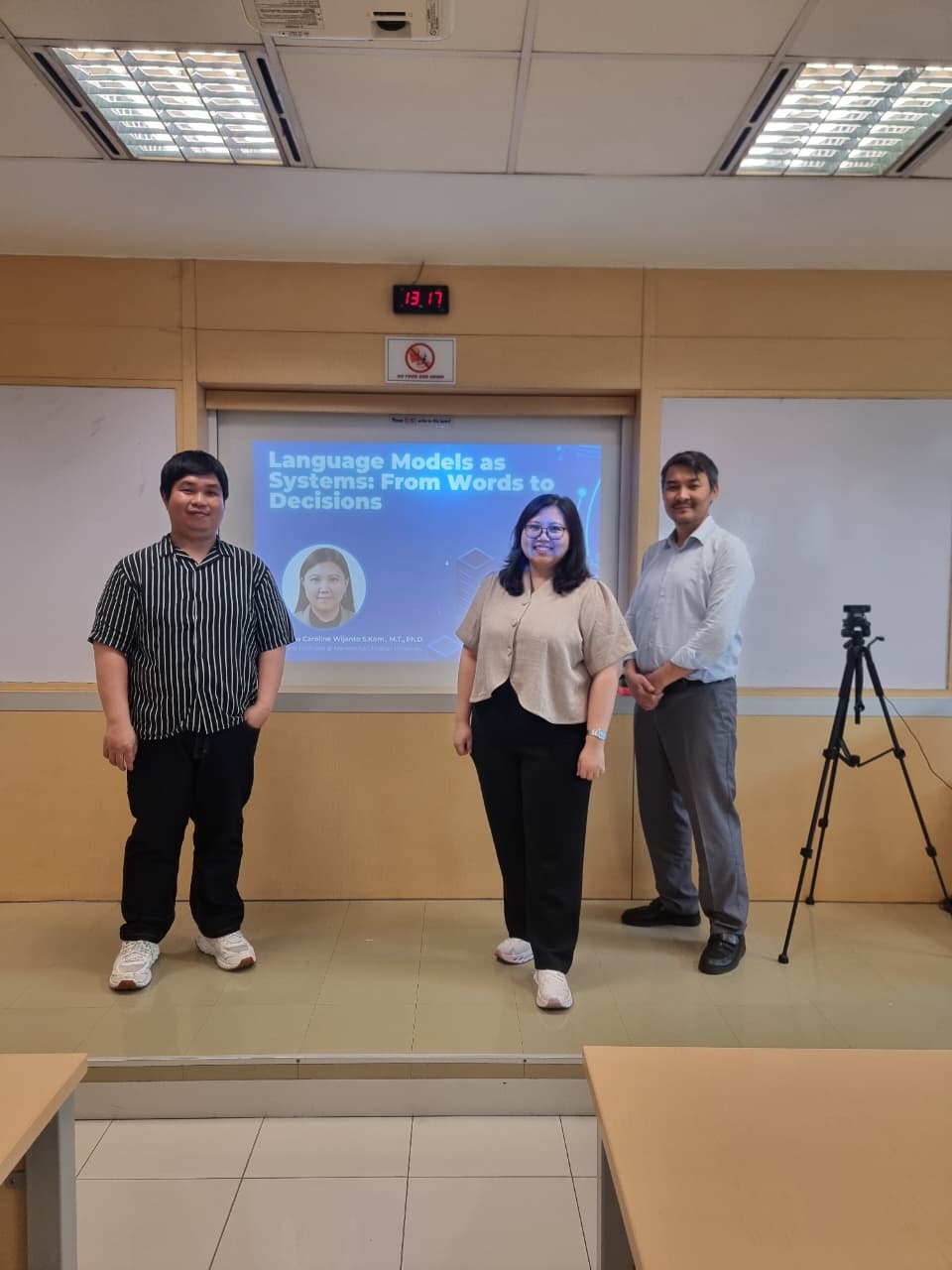
Jakarta, December 12, 2025 – The Computer Science program at BINUS University International successfully held a guest lecture session titled “Language Models as Systems: From Words to Decisions” at its JWC Campus, Room J306. The session featured Maresha Caroline Wijanto, S.Kom., M.T., Ph.D., Assistant Professor from Universitas Kristen Maranatha. The lecture, conducted from 13.30 to 15.00 WIB, attracted students and faculty members eager to gain deeper insight into the evolving role of artificial intelligence—particularly large language models (LLMs)—within modern computational systems.
In her presentation, Dr. Maresha highlighted a critical shift in how language models are conceptualized. While traditionally perceived as probabilistic tools designed to predict and generate text, today’s advanced language models function as complex systems capable of supporting reasoning processes and influencing decision-making workflows.
She explained that modern LLMs are increasingly embedded within larger software architectures, where they interact with external databases, APIs, and orchestration layers. This systems-oriented perspective enables language models to move beyond isolated natural language processing (NLP) tasks toward more integrated and practical applications.
Key discussion points included:
-
The architectural design of AI-driven systems
-
Integration of language models with enterprise tools
-
Context management and memory mechanisms
-
Reliability, evaluation metrics, and system validation
-
Ethical considerations and deployment governance
By approaching language models as systemic components rather than standalone tools, the session provided participants with a more comprehensive framework for understanding AI implementation in real-world environments.
The guest lecture also marked a meaningful academic collaboration between BINUS University International and Universitas Kristen Maranatha. The event demonstrated both institutions’ shared commitment to advancing research dialogue and fostering intellectual exchange in the field of computer science and artificial intelligence. Faculty members emphasized the importance of such initiatives in bridging theoretical research with practical application. Students were encouraged to actively engage in discussion, raising questions about scalability, computational efficiency, and the long-term implications of AI-driven automation.
The interactive session concluded with an open discussion, where participants explored the broader impact of language models on industries ranging from education and healthcare to finance and software development. Dr. Maresha underscored the necessity for future computer scientists to adopt a systems-thinking mindset—one that balances technical innovation with ethical responsibility.
Through events like this guest lecture, BINUS University International continues to reaffirm its dedication to providing globally relevant education and exposure to cutting-edge technological advancements. By facilitating expert-led discussions and academic collaboration, the institution equips its students with the analytical skills required to navigate the rapidly evolving AI landscape. The session not only expanded participants’ technical understanding but also inspired critical reflection on how language models are transforming the way digital systems interpret information and support decision-making processes in today’s data-driven world.