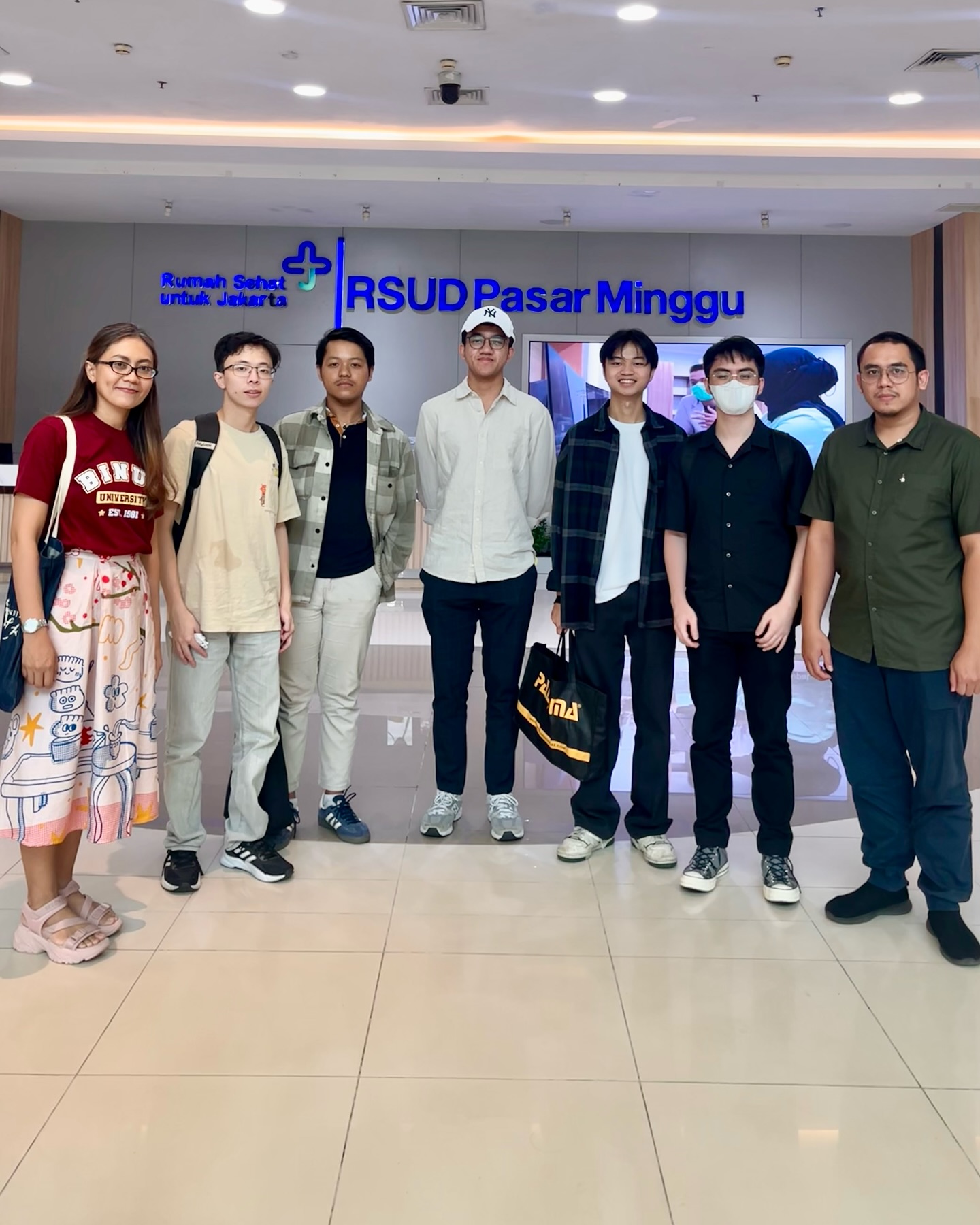
Access to good healthcare is not only about the number of doctors or the sophistication of medical devices. It is also about how clinical information is collected, understood, and used in every patient encounter. Responding to this challenge, a team from BINUS University is developing AnamnesaGPT – Context-Aware Clinical Decision Support, an AI-based system designed to support clinicians during anamnesis and decision-making, without replacing their professional judgment.
Developed in collaboration with PT RadiologiNet Indonesia and tested together with the clinical team at RSUD Pasar Minggu, Jakarta, AnamnesaGPT aims to make clinical reasoning more structured, transparent, and traceable in everyday practice. PT RadiologiNet Indonesia is represented in this collaboration by dr. Praharsa Akmaja C., Sp.Rad., who brings radiology expertise and direct experience from clinical workflows into the development process.
The AnamnesaGPT project started during the COVID-19 pandemic, at a time when hospitals had to handle high patient loads, rapid decision-making, and evolving clinical guidelines, often under resource constraints. What initially began as an exploratory prototype to support anamnesis and early triage has since grown into a long-term research program that continues to be refined until today.
Over several years, the team has iterated on the way the system asks questions, interprets answers, and offers context-aware prompts. The focus is not on replacing doctors, but on helping them organize information, avoid missing crucial details, and document their reasoning in a more systematic way.
One of the key milestones in this collaboration took place on Tuesday, 28 January 2025. The project team chose to spend the day inside RSUD Pasar Minggu. With campus offices closed, the meeting was moved from the usual rooms at BINUS to the hospital itself.
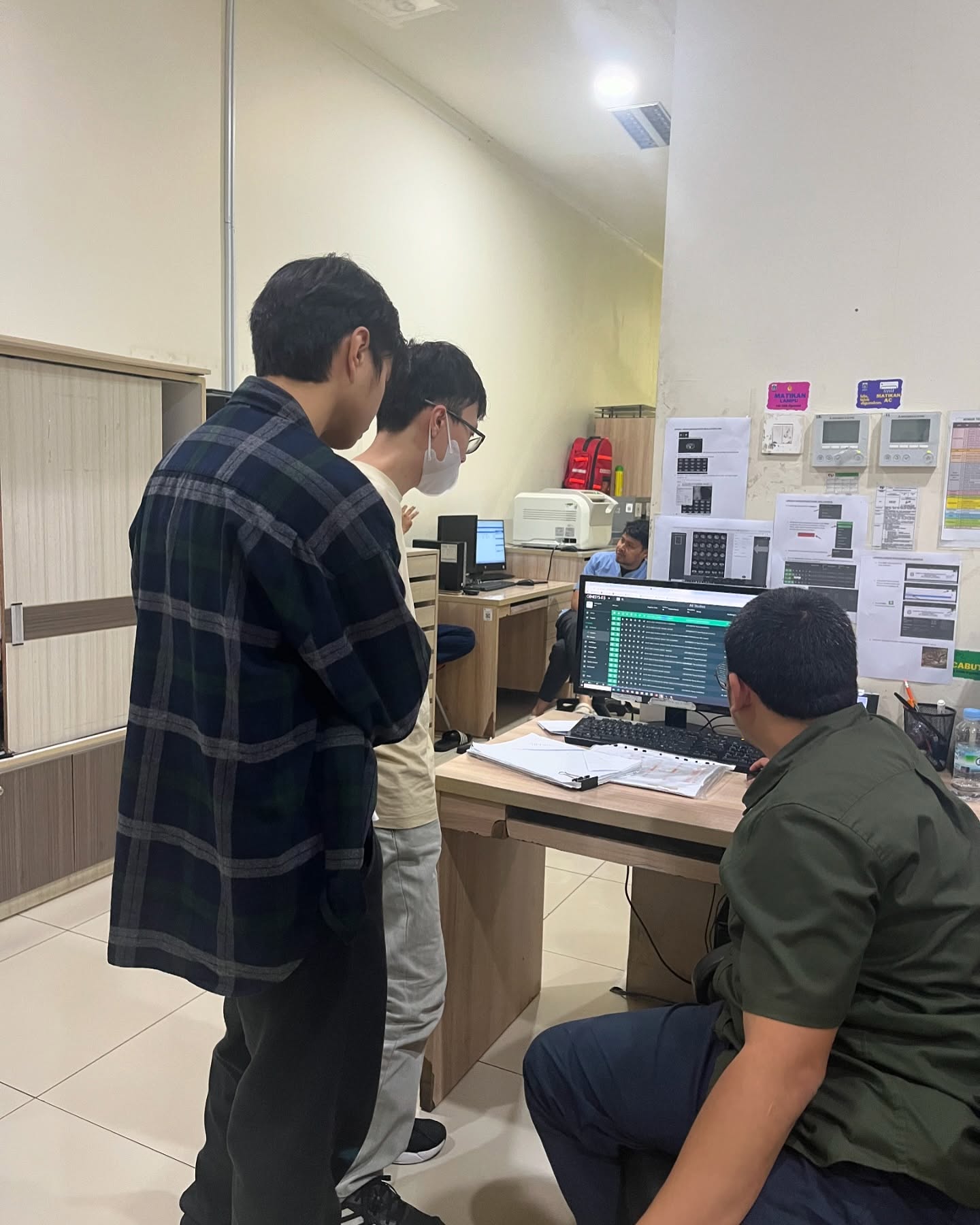
This decision was more than logistical. By meeting directly in the hospital environment, the team could finally step into the radiology workspace, observe how medical staff navigate their day, and see the actual workload that radiologists and referring clinicians face. They observed how imaging requests arrive, how information about patients is passed from one system and person to another, and how time pressure shapes every decision.
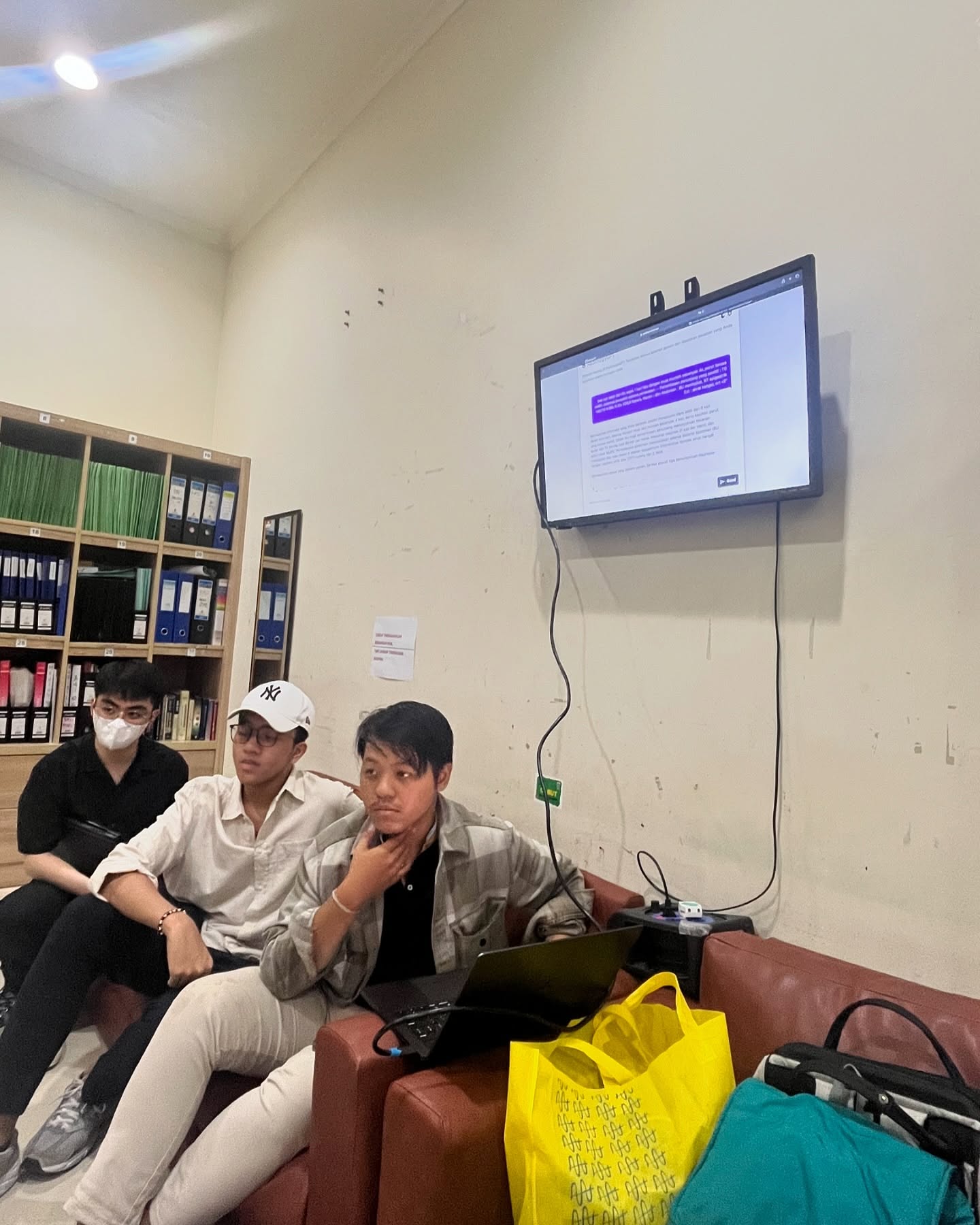
During this visit, the latest version of AnamnesaGPT was demonstrated and discussed with the RSUD Pasar Minggu team. The session was used to validate question flows, examine how the system presents suggestions, and test whether its prompts match the language and thought process of clinicians. Feedback from this session is now being used to refine both the user interface and the underlying logic of the system.
Clinical Partnership with PT RadiologiNet Indonesia
A core strength of AnamnesaGPT lies in its industry clinical partnership. PT RadiologiNet Indonesia, a company experienced in radiology and teleradiology services, brings practical insight into how imaging is requested, interpreted, and reported within Indonesia’s healthcare system.
Through dr. Praharsa Akmaja C., Sp.Rad., the collaboration ensures that the system’s behaviour is always checked against clinical reasoning, safety considerations, and actual field experience. Validation sessions include discussions of real-world scenarios, edge cases, and situations where data is incomplete or ambiguous. Rather than treating feedback as an afterthought, the development team systematically translates clinician comments into concrete improvements in the system.
This collaborative model helps ensure that AnamnesaGPT is not just a research prototype that lives in a lab, but a tool that can realistically support decision-making in hospital environments like RSUD Pasar Minggu.
What AnamnesaGPT Tries to Solve
AnamnesaGPT is designed as a context-aware clinical decision support system with a specific focus on the anamnesis phase. Its primary goal is to help clinicians collect and structure patient information more thoroughly and consistently.
The system assists in organizing questions, highlighting follow-up points that might otherwise be missed, and surfacing relevant considerations based on the information already gathered. It also supports documentation by leaving a clear trail of what was asked, what was answered, and which lines of reasoning were considered.
At the same time, the project is explicit about its limits. AnamnesaGPT does not diagnose or decide. Final responsibility remains fully with licensed healthcare professionals. The system is a tool to support thinking, not to substitute clinical expertise.
Like many applied research initiatives, this project operates with constrained computational resources, a relatively small interdisciplinary team, and the ongoing challenge of balancing academic work with the realities of hospital schedules and IT infrastructure. These limitations, however, have become part of the design considerations rather than reasons to delay progress.
The team develops features that can run on realistic infrastructure, designs interfaces that can be learned quickly by busy clinicians, and structures milestones so that each research step results in a tangible improvement to the tool. The work rarely looks dramatic from the outside, but it moves steadily: small updates, tested in real contexts, then revised again.
Behind this persistence is a simple motivation: using research to build a future in which healthcare workers are better supported, and patients benefit from more consistent, well-documented clinical decisions. The project shows that impactful research does not always have to introduce something entirely new or grand; even focused, incremental tools—if developed with discipline and continuity—can shift how work is done in hospitals.
In the next stages, the AnamnesaGPT team plans to deepen its collaboration with RSUD Pasar Minggu and PT RadiologiNet Indonesia, and to expand validation to more clinical departments. Future work includes exploring integration with existing hospital information systems, strengthening data governance in line with Indonesian regulations, and sharpening the decision support components so they remain both clinically useful and transparent.
The long-term vision is clear: to contribute to an ecosystem where Indonesian healthcare facilities can adopt AI tools that are built with them, for their realities, and not merely imported from other contexts. Through sustained collaboration, continuous feedback, and a commitment to responsible use of AI, AnamnesaGPT seeks to become one of the building blocks in that future.