

Waiting for Meaning: Paul’s Guest Lecture on Beckett at UKI
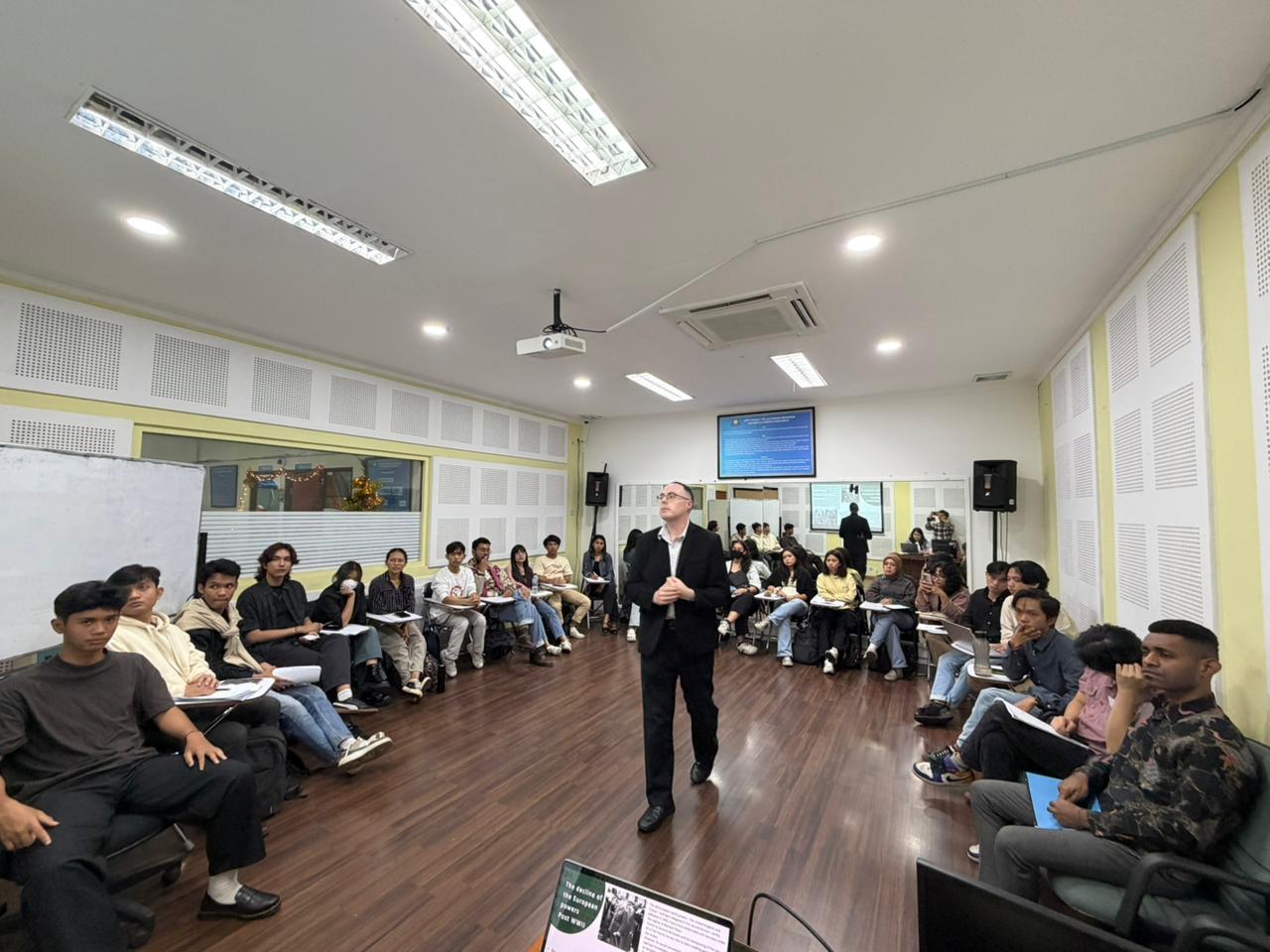
On December 4, 2025, Universitas Kristen Indonesia (UKI) welcomed Paul as a guest lecturer for a session that delved into the historical context, post-war psychology, and literary significance of Samuel Beckett’s Waiting for Godot. The lecture invited students to explore how one of the most iconic plays of the 20th century reflects the anxieties and uncertainties of its time, while continuing to resonate in today’s world.
Paul began by situating Beckett’s work within the upheaval of post-WWII Europe, a period marked by the decline of colonial powers and a profound moral crisis involving guilt, uncertainty, and questions of identity. He connected these themes to Beckett’s own life—his move from Dublin to Paris, his years as an exile, and his participation in the French Resistance—showing how personal experience shaped the existential undertones of his writing.
Through this lens, Waiting for Godot emerged as more than an absurdist drama. Paul highlighted its reflections on waiting for news, fate, freedom, and stability, framed by the atmosphere of German-occupied France. He also explored how colonization and dehumanization influenced both Ireland’s legacy and Beckett’s wartime outlook, contributing to a broader loss of spiritual identity that permeates the play.
The lecture concluded with a discussion on why Beckett’s work continues to matter today. Themes of uncertainty, identity, and resilience remain strikingly relevant in contemporary society, reminding us that the act of “waiting” is not only a metaphor for post-war Europe but also for the human condition itself.
By weaving together history, psychology, and literature, Paul’s lecture offered students at UKI a deeper appreciation of Beckett’s masterpiece and its enduring power to provoke reflection across generations.