
When Geopolitics Shakes the Oil Market
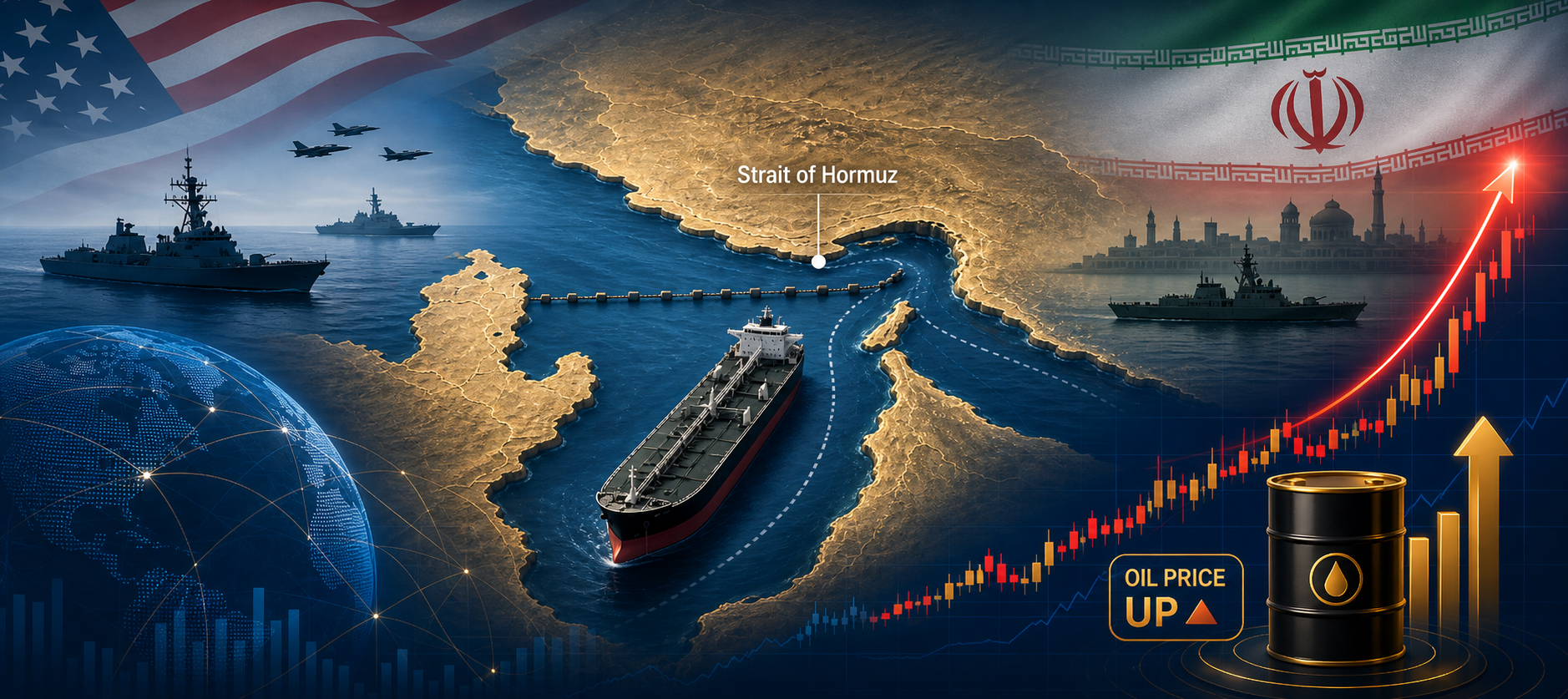
Tension between the United States and Iran is not only a political issue. It is also a major financial and economic risk. One of the biggest concerns is the Strait of Hormuz, a narrow but critical shipping route through which a large share of the world’s oil passes every day.
If conflict escalates and the Strait is disrupted or blocked, global oil supply could tighten almost immediately. Even the threat of disruption can push prices higher, because markets react not only to actual shortages, but also to uncertainty and fear.
That is why the Strait of Hormuz matters so much to investors, businesses, and governments. Higher oil prices can quickly feed into transportation costs, production costs, inflation, and market volatility. Energy-importing countries would feel the pressure first, but the impact would spread across the global economy.
For financial markets, this kind of geopolitical shock changes expectations fast. Investors may move into safer assets, while companies exposed to fuel, shipping, and logistics costs could face new risks. In other words, a regional conflict can become a global market story in a matter of hours.
For finance students, this is a clear reminder that markets do not move on numbers alone. They also move on politics, strategy, trade routes, and global security. The Strait of Hormuz is more than a location on the map. It is one of the clearest examples of how geopolitics and finance are deeply connected.