

Market Shock: Why Transparency is the New Liquidity in Indonesia
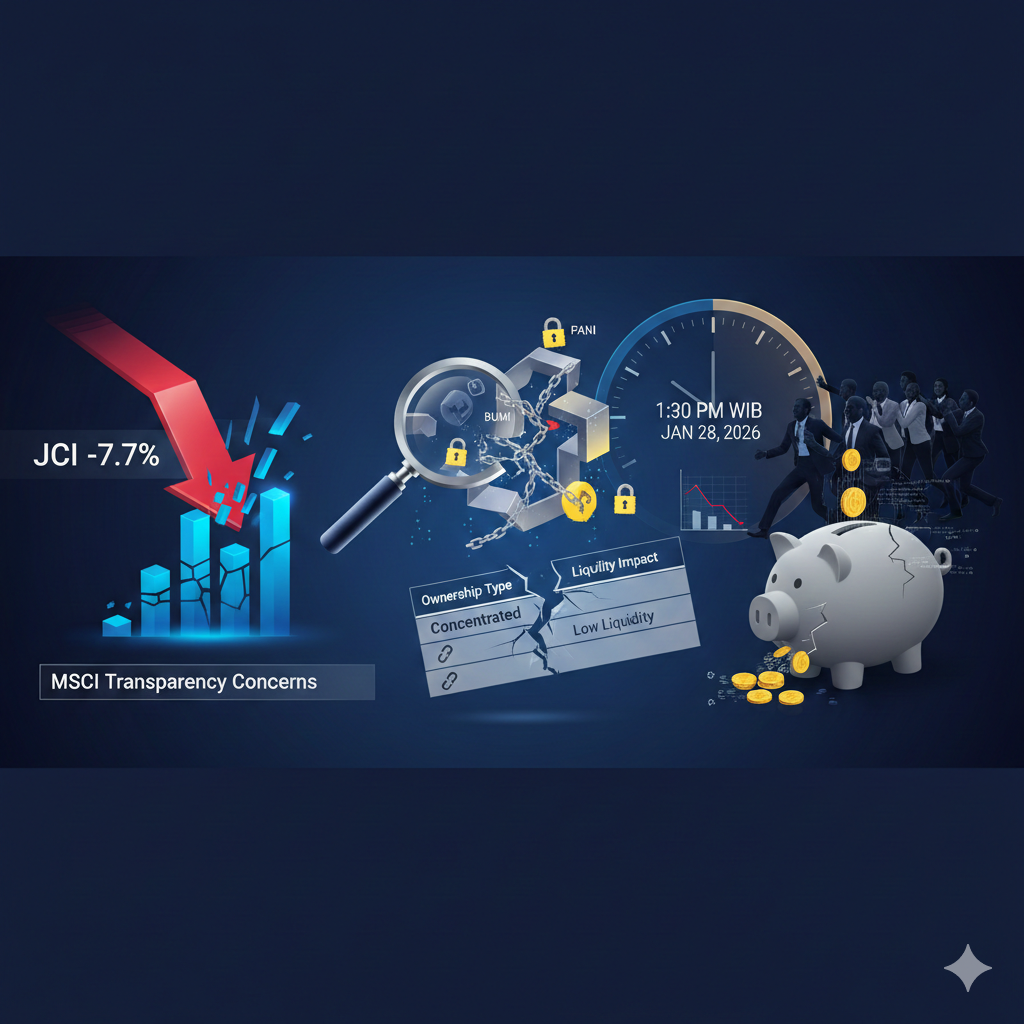
The Jakarta Composite Index (JCI) experienced a sharp 7.7% correction this morning, sending a clear signal to the global financial community: transparency is not just a regulatory hurdle; it is the lifeblood of market liquidity.
The sell-off was triggered by MSCI’s decision to freeze the rebalancing of its Indonesia Index, citing concerns over the transparency of shareholding reports from market authorities. For investors and researchers in banking and finance, this event highlights the critical link between ownership data and systemic liquidity risk.
The Mirage of Market Capitalization
At the heart of the issue is the Free Float—the portion of a company’s shares that are actually available for public trading. When shareholding data is opaque, the “investable” market cap of a stock becomes a mirage. Global indices like MSCI rely on precise data to ensure that when a fund needs to buy or sell a position, there is enough “depth” in the market to absorb the trade without causing a price collapse.
The Mechanics of the Crash
The 7.7% drop we witnessed today is the result of three converging risks:
-
Exit Risk: When MSCI freezes a rebalancing, institutional funds that “front-ran” expected inclusions must exit their positions immediately. In stocks with concentrated ownership, there aren’t enough buyers to meet this sudden supply, leading to the “Auto Reject Bawah” (ARB) limit-down hits we saw in tickers like PANI and BUMI.
-
Information Asymmetry: Opaque ownership creates a “lemon market” effect. International investors become wary of trading against “hidden” insiders. To compensate for this risk, they demand wider bid-ask spreads, which effectively dries up liquidity.
-
Concentration Bottlenecks: Stocks that appear valuable but have 80% or more of their shares held by a few entities are prone to extreme volatility. These “liquidity bottlenecks” mean that even a moderate sell order can move the price by double digits.
The Road Ahead
The current crisis of confidence underscores that for an emerging market to mature, the quality of its data must match the growth of its valuation. The Indonesia Stock Exchange (BEI) and the OJK are now under pressure to provide the granular ownership data required to restore faith in the “tradability” of Indonesian equities.
Without a swift move toward higher disclosure standards, the risk isn’t just a one-day drop—it’s the potential for a sustained “liquidity discount” on the entire Indonesian market.