

Gold in Times of Turmoil: Is it Truly a Safe Haven for Your Portfolio?
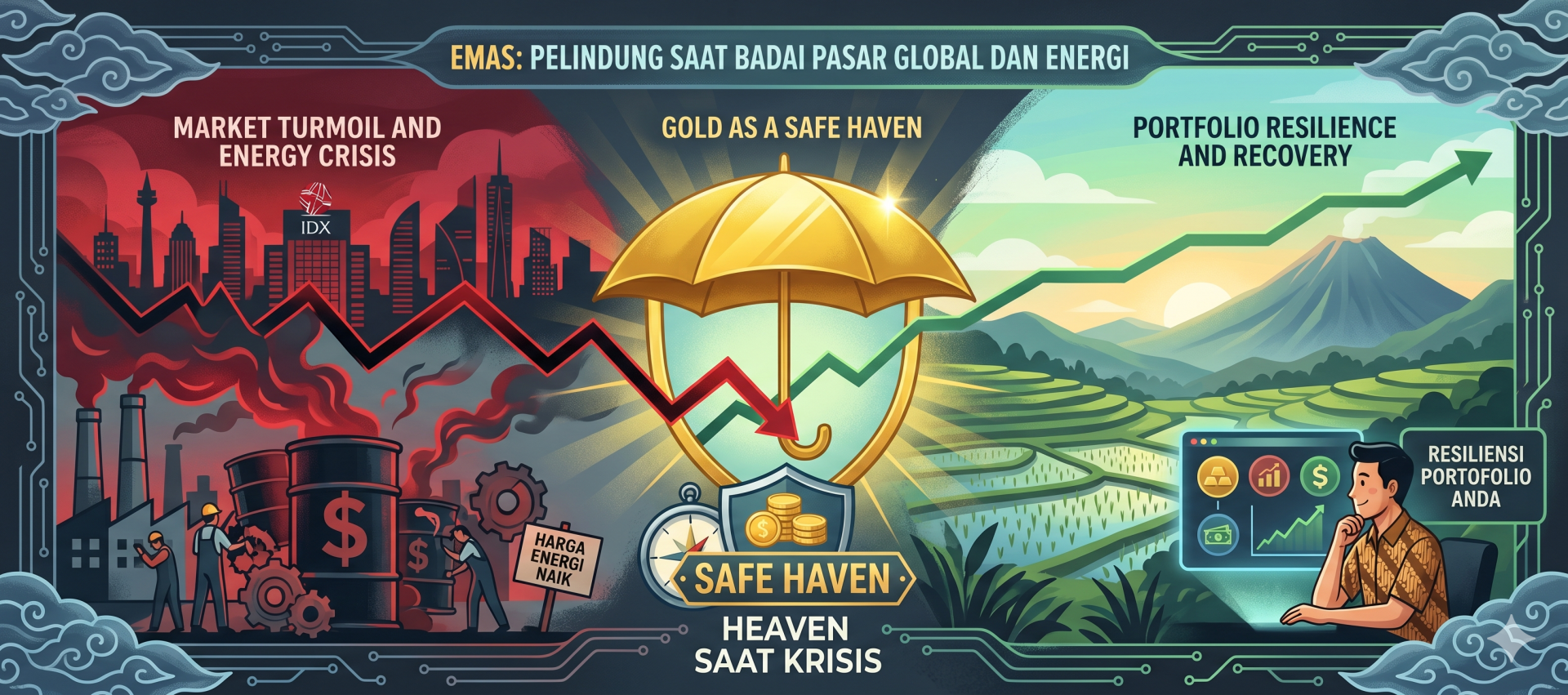
In recent months, global markets—including the Indonesia Stock Exchange (IDX)—have felt the weight of geopolitical instability and soaring energy prices. When the “red” dominates our screens, investors instinctively look for a place to hide. Traditionally, that place is gold.
But does gold actually work the way we think it does? A seminal study by Dirk Baur and Brian Lucey, published in the Financial Review, provides a data-driven look at how gold behaves during market crashes. Their findings offer vital lessons for today’s Indonesian investor.
Hedge vs. Safe Haven: What’s the Difference?
The researchers make an important distinction that every investor should understand:
-
A Hedge: An asset that is uncorrelated with stocks on average. It helps balance a portfolio over long periods.
-
A Safe Haven: An asset that is uncorrelated (or even negatively correlated) with stocks specifically during extreme market stress or crashes.
The Findings: Gold as a “Shield”
Baur and Lucey analyzed decades of data and found that gold is indeed a safe haven. When stock markets plunge, gold often holds its value or increases, acting as a shield for your capital. However, there is a catch: this safe-haven effect is usually short-lived.
The study found that the peak “safe haven” benefit typically lasts around 15 trading days. After the initial shock of a crisis, gold often begins to follow the broader market trends again as investors sell off their gold holdings to cover losses elsewhere (margin calls) or as the initial panic subsides.
Why This Matters for Indonesia Today
As Indonesia navigates high energy costs and global uncertainty, the “Baur-Lucey Effect” reminds us of three things:
-
Timing is Everything: Gold is most effective as a protection against the “shock” of a crisis. If you wait until the middle of a prolonged downturn to buy, you may miss the primary safe-haven window.
-
Diversification is Not Static: Gold shouldn’t be your only strategy, but having a 5-10% allocation can drastically reduce the “drawdown” (peak-to-trough loss) of your portfolio during the first few weeks of a market panic.
-
Psychology Drives the Price: The study suggests that gold’s value in a crisis is driven by investor psychology. In a “flight to quality,” gold remains the world’s most trusted asset when paper currency and stocks feel risky.
The Bottom Line
While we cannot control global energy prices or international tensions, we can control our portfolio’s resilience. Following the evidence from Baur and Lucey, gold remains an essential tool for the modern investor—not as a get-rich-quick scheme, but as a critical insurance policy for when the market’s storm hits hardest.
Disclaimer: This article is for informational purposes and does not constitute financial advice.