

A Slow-Burning Shock – How Trump’s Tariff War Reshaped Global Trade
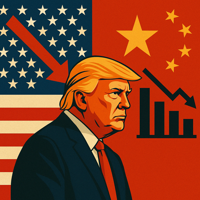
Introduction: While global disruptions like the 2008 crisis and COVID-19 arrived like earthquakes, President Donald Trump’s 2018 tariff war with China represented a more subtle but equally transformative shock to the global economy.
The Rise of a Trade Conflict: Trump’s tariffs, initially framed as protectionist measures, quickly escalated into a wide-ranging geopolitical standoff. Chinese retaliation was swift, and both countries entrenched themselves in a battle that extended beyond trade into tech, security, and foreign investment.
Supply Chains Rerouted: As tariffs hardened, global businesses were forced to pivot. Multinational corporations began diversifying their production away from China, favoring countries like Vietnam, Mexico, and increasingly, Indonesia. Global trade growth slowed, with the WTO noting a sharp decline from 4.6% in 2017 to just 1.2% in 2019.
Markets Recalibrate: Financial markets grew more volatile. Investors reweighted political risk, shifting capital away from China toward perceived neutral markets. The U.S. dollar strengthened as a safe haven, while emerging markets like Indonesia faced capital outflows, currency pressure, and rising sovereign yields.
Conclusion: Unlike a sudden crisis, the tariff war represented a “slow shock” — gradually dismantling old trade norms and forcing businesses and governments to rethink globalization itself.